
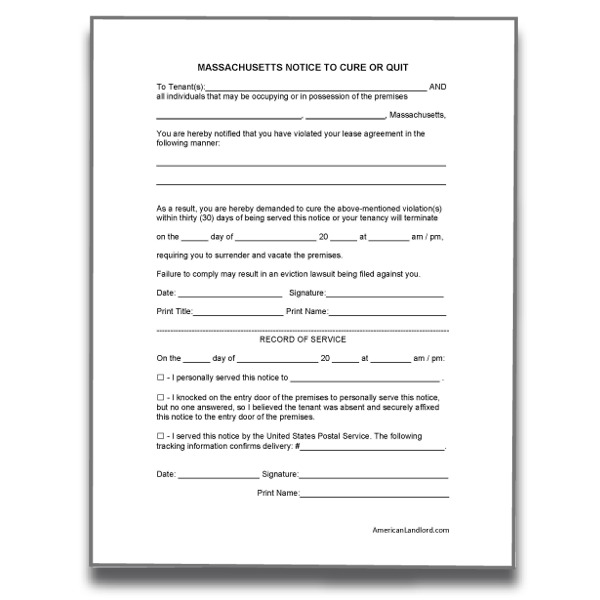

Landlords will use this Massachusetts Notice to Cure or Quit if a tenant has violated their tenancy for reasons other than nonpayment of rent. The time frame for violations to be corrected is 30 days. If the tenants fails to comply, then the landlord may proceed with filling a summary process to recover possession.
What Does Massachusetts Law Say?
How to Fill Out
Step 1 – Complete the name(s) of the tenant(s).
Step 2 – Enter the rental property address.
Step 3 – Identify the violations.
Step 4 – Include the date and time by which the tenant must comply.
Step 5 – Sign and date.
Step 6 – Serve the tenant with the notice and complete the record of service section stating how and when the tenant was served.
• Nonpayment of Rent: 14 days. Ch 186 § 11
• Illegal Activity: 30 days. Section 32J(3)
• Termination (Month-to-Month Lease): 30 days. Ch 186 § 12
• Eviction Lawsuit: Summary Process to Recover Possession. Section 32J
Please read our Terms of Use. AmericanLandlord.com is not a substitute for consulting with a legal professional specializing in landlord-tenant law.