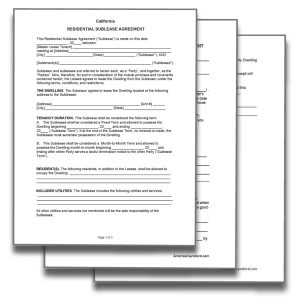

California Residential Lease Agreement prepared for landlords renting single-family dwellings, including houses, condominiums, and townhomes, located within the State of California. This lease is structured to reflect California’s disclosure-heavy regulatory environment while providing a clear, organized framework for documenting tenancy terms in a format designed for practical everyday use.
Lease Summary with California-Specific Notices
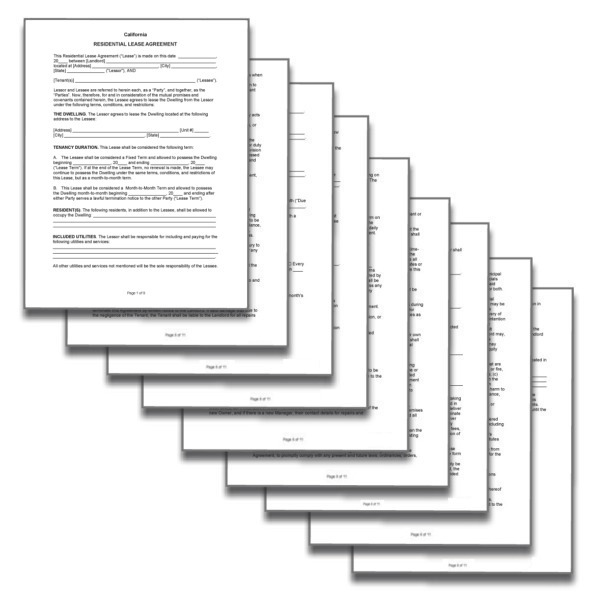
The agreement begins with a front-loaded Lease Summary designed to capture essential tenancy information in one place. Landlords record the property address, tenant names, lease term, rent amount, security deposits, utilities, pets, parking arrangements, and payment instructions in clearly marked fields for consistent completion and recordkeeping.
Where applicable, the Lease Summary also provides space to document commonly required California notices, including rent cap and just-cause exemption status under AB 1482, and flood hazard disclosure information when required by law.
Required Disclosures & Tenant Acknowledgments
California law requires numerous written disclosures at the start of a tenancy. This lease includes dedicated disclosure pages with acknowledgment lines and checkbox selections to document tenant receipt of commonly required notices. Depending on the property and circumstances, these disclosures may include:
- Statewide rent cap and just-cause eviction notice (Civil Code §1947.12 / AB 1482)
- Flood hazard disclosure where applicable
- Megan’s Law database notice
- Bed bug disclosure and informational materials
- Smoke and carbon monoxide detector compliance acknowledgment
- Lead-based paint disclosure for applicable pre-1978 housing (federal requirement)
Additional local disclosures may be required in certain jurisdictions such as Los Angeles, San Francisco, Oakland, or other rent-regulated cities.
California Residential Lease Terms
The body of the lease addresses tenancy provisions commonly relied upon in California residential rentals, including:
- Identification and permitted residential use of the Premises
- Occupancy limits, guest policies, and subletting restrictions
- Rent due dates, payment handling, and returned-payment procedures
- Late fee limitations consistent with California law
- Security deposit limits and required return timelines under Civil Code §1950.5
- Utility allocation and service continuity expectations
- Maintenance standards and habitability obligations
- Mold and moisture reporting responsibilities
- Landlord right of entry with required notice under Civil Code §1954
- Alterations, lock changes, and fixture installation rules
- Pet, smoking, and parking policies
- Insurance considerations and allocation of liability
- Abandonment, surrender, and holdover tenancy provisions
Condition Documentation & Move-In Records
The lease references the use of a written Move-In / Move-Out Condition Checklist to document property condition at the beginning and end of the tenancy. This checklist is provided as a separate document and is not included with this lease. Landlords who wish to use a standardized condition report may obtain the checklist as part of the California Rental Forms Kit, or use a comparable condition document of their choosing.
Format Options & Delivery
This lease agreement is available in two formats:
- Fillable PDF for electronic completion, saving, and printing
- Professionally printed version mailed for signing and long-term record retention
An instruction page is included to help landlords identify sections typically completed prior to tenant signing.
California Compliance & Use With Addenda
This lease is intended for use as a California-specific residential lease and may be supplemented with additional addenda or attachments when required. Depending on the property, landlords may need to provide additional documents such as local rent control notices, utility billing disclosures, HOA rules, or jurisdiction-specific information required by city or county law.
This California Residential Lease Agreement is provided for informational purposes only and does not constitute legal advice. Landlords are responsible for reviewing current California statutes and local ordinances to determine whether additional disclosures or attachments are required for the rental property.