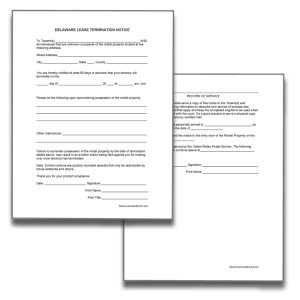
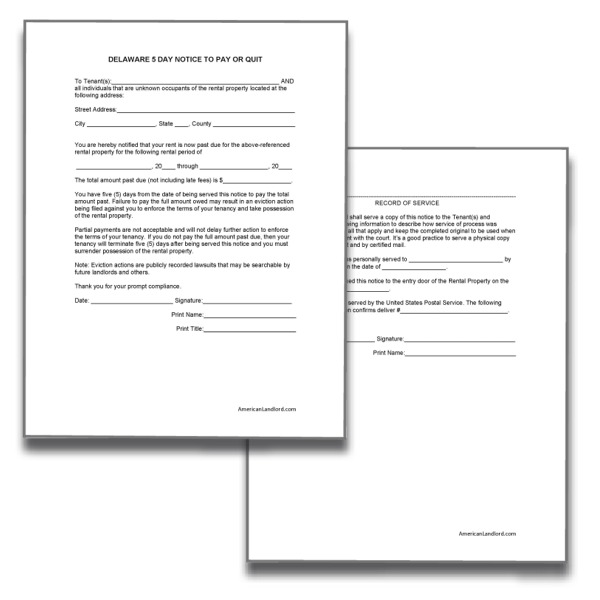
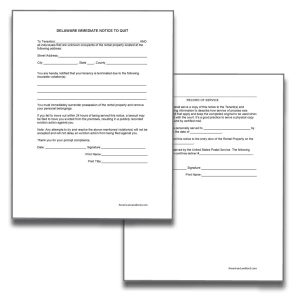
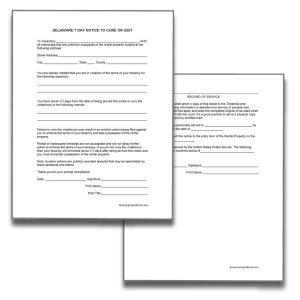

A 5 Day Notice to Pay or Quit is the most commonly used eviction notice in Delaware because it enforces the most common violation of tenancy, unpaid rent. In Delaware, there’s a 5 day grace period when rent is due. If the rent is not paid, the landlord may serve the tenant with this notice to demand the past due amount be paid in full within 5 days or they tenancy will be terminated.
What Does Delaware Law Say?
(a) A landlord or the landlord’s agent may, any time after rent is due, including the time period between the date the rent is due and the date under this Code when late fees may be imposed, demand payment thereof and notify the tenant in writing that unless payment is made within a time mentioned in such notice, to be not less than 5 days after the date notice was given or sent, the rental agreement shall be terminated. If the tenant remains in default, the landlord may thereafter bring an action for summary possession of the dwelling unit or any other proper proceeding, action or suit for possession.
(b) A landlord or the landlord’s agent may bring an action for rent alone at any time after the landlord has demanded payment of past-due rent and has notified the tenant of the landlord’s intention to bring such an action. This action may include late charges, which have accrued as additional rent.
(c) If a tenant pays all rent due before the landlord has initiated an action against the tenant and the landlord accepts such payment without a written reservation of rights, the landlord may not then initiate an action for summary possession or for failure to pay rent.
(d) If a tenant pays all rent due after the landlord has initiated an action for nonpayment or late payment of rent against the tenant and the landlord accepts such payment without a written reservation of rights, then the landlord may not maintain that action for past due rent.
How to Fill Out
Step 1 – Complete the full name of the tenant(s).
Step 2 – Enter the rental property address.
Step 3 – Identify rental period that is past due and the amount owed.
Step 4 – The landlord must sign and date.
Step 5 – Once the notice is served on the tenant(s), the person who served the notice must attest to how and when it was delivered by completing the Record of Service section.
• Nonpayment of Rent: 5 days. Title 25 § 5502
• Noncompliance: 7 days. Title 25 § 5513
• Irreparable Harm: Immediate. § 5513(b)
• Termination (Month-to-Month Lease): 60 days. § 5106
• Eviction Lawsuit: Tenant Obligations and Landlord Remedies Title 25, Chapter 55
Please read our Terms of Use. AmericanLandlord.com is not a substitute for consulting with a legal professional specializing in landlord-tenant law.