Delaware Eviction Process
The process for evicting a tenant in Delaware is referred to as a summary process case. The information on this page applies to residential rental property. Commercial or agricultural real estate (as well as residential foreclosures) may have entirely different proceedings.
1. Complete the proper notice. Depending on the circumstances, there are two types of notices a landlord can use to begin the eviction process. The following are a list of the types of notices:
- Delaware Immediate Notice to Quit (For irreparable harm)
- Delaware 5 Day Notice to Pay or Quit (For nonpayment of rent)
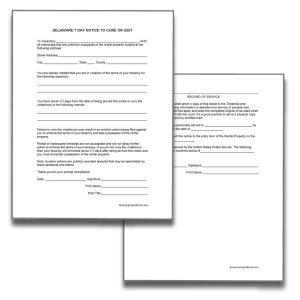
- Delaware 7 Day Notice to Cure or Quit (For curable violations)
- Delaware 60 Day Notice to Terminate Tenancy (For tenancy-at-will or month-to-month agreements)
2. Serve the tenant and wait. A landlord must deliver the notice to the tenant and wait the required amount of time for the tenant to either pay the rent, correct the violation, or move.
3. Summary process is filed. If the tenant fails to act, the landlord may begin Summary Process proceedings by filing a complaint with the county court.
- Complaint – This official court form is used to describe the landlord-tenant relationship and the reason why the Summary Process filing is being made.
4. Serve the tenant with notice of the lawsuit. The court will make arrangements to have the tenant served with a notice of when the scheduled hearing will be held and the deadline for the tenant to submit an answer.
5. Judgment for possession. Unless the tenant is able to provide a convincing defense, the court will award the landlord a judgment for possession and if the tenant still has not surrendering the premises, the landlord can ask for Writ for Possession so the sheriff can remove the tenant from the property.
Notice to Quit
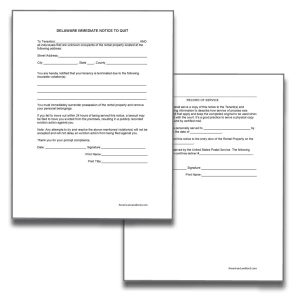
An Immediate Notice to Quit requires a tenant to surrender the premises immediately. This particular version allows for 24 hours to vacate.
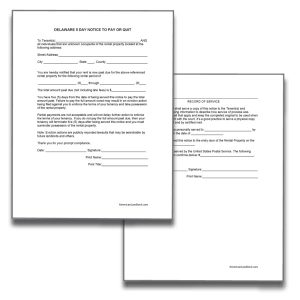
A 5 Day Notice to Pay or Quit is served when a tenant fails to pay rent after the grace period. This notice demands the full amount due within 5 days or terminates tenancy.
A 7 Day Notice to Cure or Quit is served when a tenant commits a curable act that violates the terms of their tenancy. This notice demands the violation be cured within 7 days or the tenancy is terminated.