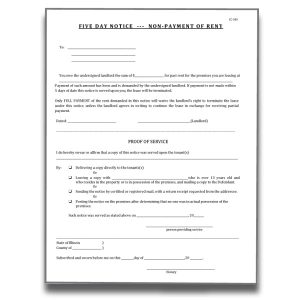
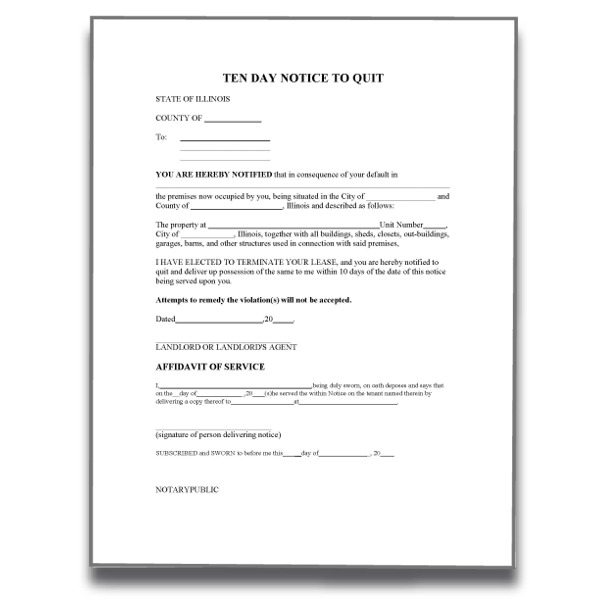
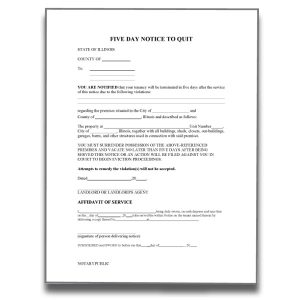

The Illinois 10 Day Notice to Quit is a free download that terminates the lease of a tenant within 5 days for unlawful activity and does so without any chance to cure the violation. This document requires a landlord to specifically state the reason for ending the tenancy by stating what tenant actions occurred such drug manufacturing, sexual assault, illegal discharge of a firearm, etc.
What Does Illinois Law Say?
How to Fill Out
Step 1 – Enter the county.
Step 2 – Provide the name and address of the tenant.
Step 3 – Specify the violations that occurred.
Step 4 – Type the City and County where the property is located.
Step 5 – Then enter the rental property street address.
Step 6 – Date and sign.
Step 7 – Serve the tenant with the notice and have the person who delivered it sign the affidavit of service section in the presence of a notary.
• Nonpayment of Rent: 5 days. 735 ILCS 5/9-209
• Noncompliance: 10 days. 735 ILCS 5/2-210
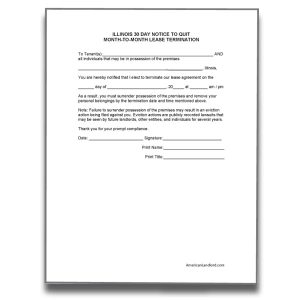
• Termination (Month-to-Month Lease): 30 days. 735 ILCS 5/9-207
• Eviction Lawsuit: Forcible Entry and Detainer. Illinois Code of Civil Procedure
Please read our Terms of Use. AmericanLandlord.com is not a substitute for consulting with a legal professional specializing in landlord-tenant law.